Can We Actually Destroy PFAS? Here's What the Science Says
MAY 9, 2026
Why "Removal" Isn't Enough
For years, the standard answer to PFAS in water was activated carbon filtration. It works — carbon adsorbs PFAS molecules and pulls them out of the water. Problem solved, right?
Not quite. The PFAS doesn't disappear. It's now sitting on the carbon. Eventually that carbon is saturated and has to go somewhere — usually to landfill or incineration. At that point, you've transferred the problem, not solved it.
True PFAS management means destruction: breaking the carbon-fluorine bond and converting the molecule into something harmless. That's a much harder problem, but it's one the industry is now solving.
Thermal Destruction: High Heat, Real Results
The most established destruction route is thermal — subjecting PFAS to extreme temperatures until the C–F bond breaks.
High-temperature incineration (above 1,100°C) can mineralise PFAS effectively, but it requires precise conditions. Too cool, and you risk forming incomplete combustion products that may themselves be harmful. The science here has advanced significantly — modern thermal oxidisers, particularly those designed specifically for PFAS-laden waste streams, achieve verified destruction with emissions testing to confirm no net release.
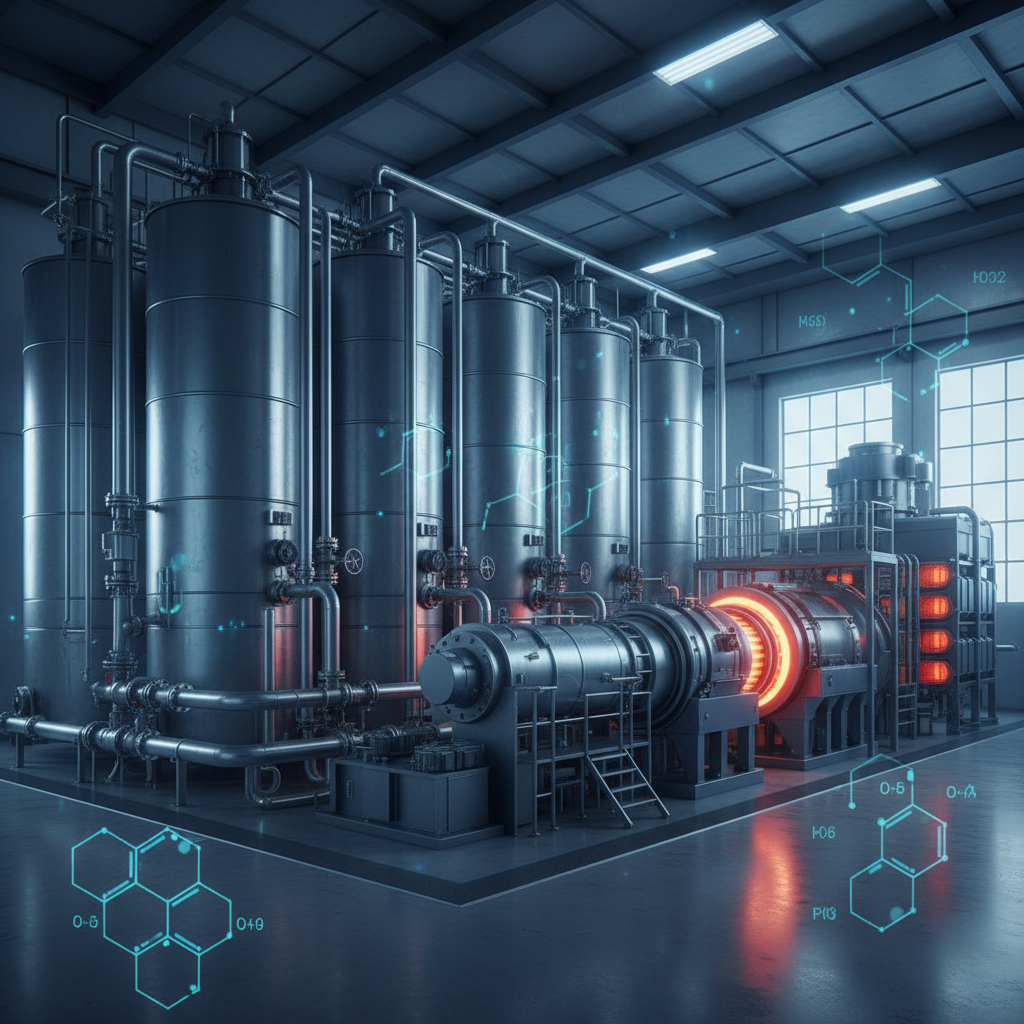
One practical example: spent activated carbon from PFAS treatment can be processed through a rotary kiln (which thermally desorbs the PFAS from the carbon, restoring the carbon for reuse) and then through a dedicated thermal oxidiser. The outputs are calcium fluoride and CO₂ — both inert. Independent emissions testing using the OTM-45 method has confirmed output PFAS levels within ambient measurement uncertainty, meaning no net addition to the environment.
Key consideration: thermal destruction is well-suited for concentrated waste streams — saturated carbon, PFAS-rich concentrates, or contaminated soils. It's less practical for large-volume dilute water sources.
Electrochemical Oxidation: Destroying PFAS in Water
For treating PFAS directly in water — particularly at high concentrations — electrochemical advanced oxidation is one of the most promising emerging technologies.
The process uses boron-doped diamond (BDD) electrodes to generate powerful hydroxyl radicals and other reactive species at the electrode surface, which attack and break down PFAS molecules in situ. No chemicals added. No phase transfer.
Research and pilot-scale deployments have demonstrated effective destruction of PFOA, PFOS, and a range of short-chain PFAS — compounds that activated carbon struggles with. It works best on pre-concentrated PFAS streams (e.g., from ion exchange regeneration or membrane reject water), where energy costs are manageable.
This is an area of active development, with several commercial systems now available or in late-stage deployment across North America and Europe.
Sonochemical and Photocatalytic Approaches
These methods use physical energy — ultrasound or UV light — to drive PFAS breakdown.
Sonochemical treatment generates intense localised heat and pressure through ultrasonic cavitation. At the right frequencies, this can break C–F bonds, particularly for shorter-chain compounds. The challenge is energy intensity — scaling this up to treat large volumes economically remains a work in progress.
Photocatalytic processes, often using UV light combined with semiconducting catalysts (like titanium dioxide or indium-based materials), can also degrade PFAS, especially shorter chains. Research is advancing rapidly, with some combinations achieving near-complete mineralisation in controlled conditions.
These approaches are not yet mainstream at large scale, but they represent a genuinely different pathway that doesn't rely on heat — which could be valuable for applications where thermal processes are impractical.
Supercritical Water Oxidation (SCWO)
At temperatures above 374°C and pressures above 22 MPa, water enters a "supercritical" state where it behaves very differently — it becomes an excellent solvent for organic compounds and oxygen, enabling rapid and complete oxidation of even the most persistent molecules, including PFAS.
SCWO systems have been demonstrated for PFAS-containing waste streams and achieve high destruction efficiencies. The technology is more complex and capital-intensive than thermal oxidation, but it operates at lower temperatures than incineration and produces no dioxins or furans — a meaningful advantage.
Commercial SCWO units are operating for PFAS waste treatment in the US and are being evaluated in Europe. This is a technology to watch for industrial and municipal waste treatment applications.
Advanced Adsorption: Smarter Capture Before Destruction
Destruction technologies work best when PFAS is concentrated. That's why adsorption — capturing PFAS first — remains a critical step in most treatment trains.
Standard granular activated carbon (GAC) is effective for long-chain PFAS, but struggles with short-chain compounds because their smaller molecular size and different polarity make them harder to capture. Surface-modified activated carbon — where the carbon surface is chemically engineered to better interact with the PFAS carbon backbone — has shown significant performance improvements, particularly for short-chain carboxylic acids.
Puragen has developed surface-modified GAC engineered to enhance interactions between PFAS compounds and the activated carbon surface, improving removal performance for both short- and long-chain PFAS. What sets Puragen's approach further apart is what happens after the carbon is saturated. Rather than sending spent carbon to landfill or incineration, Puragen operates a dedicated thermal reactivation process that simultaneously restores the carbon for reuse and destroys the PFAS it has captured — a genuinely closed-loop solution. Critically, stack emissions testing of the thermal reactivation process measured PFAS discharged at just 22 ng/m³ (±27%) — a figure that falls within the range of PFAS concentrations already present in ambient air. In other words, the process adds no meaningful PFAS burden to the atmosphere.
The Right Tool for the Right Problem
No single technology destroys all PFAS in all situations. The 14,000+ identified PFAS compounds vary enormously in chain length, functional group, solubility, and environmental behaviour — and treatment performance varies accordingly.
Effective PFAS management requires:
- Understanding what PFAS compounds are actually present — not just "total PFAS," but individual compound identification and concentration
- Matching the treatment technology to the specific chemistry and matrix (drinking water, wastewater, soil, air emissions)
- Thinking in full treatment trains — capture, concentrate, destroy — rather than single-step solutions
- Verifying performance with independent emissions and effluent testing, not just vendor claims
Why This Matters Right Now
Regulations are tightening fast. The EU Drinking Water Directive now sets binding limits on 20 priority PFAS compounds. The US EPA has introduced Maximum Contaminant Levels for PFOA and PFOS at 4 ng/L — among the lowest regulatory limits for any contaminant ever set. England published its first PFAS action plan in early 2025.
The direction of travel is clear: PFAS limits will continue to fall, the list of regulated compounds will continue to grow, and the expectation that organisations simply "monitor and report" will give way to a requirement to treat and destroy.
The technologies to do that exist today. They work. The challenge now is matching the right solution to the right problem — and that requires the kind of analytical understanding and technical consultancy that bridges the gap between laboratory data and real-world decisions.
"The question is no longer whether PFAS can be destroyed. It's whether organisations are ready to act before they are forced to."
PFAsys is a UK-based PFAS analytical consultancy specialising in method optimisation, contamination assessment, and regulatory compliance support. Book a free discovery call to discuss your PFAS challenges.
TAGS