The Invisible Risk We're Not Ready For
APRIL 10, 2026
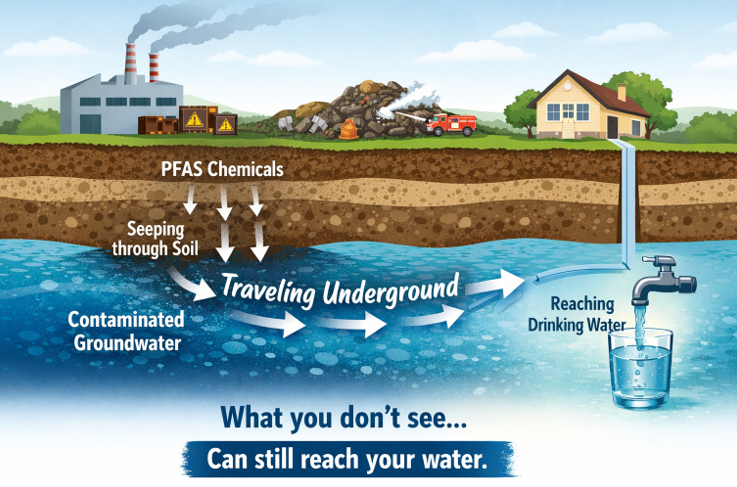
Most PFAS chemicals behave very differently from typical environmental pollutants. Once they enter the environment, they don't simply remain near the source. Instead, they can move slowly but steadily through soil and eventually reach groundwater.
This is particularly concerning because groundwater is a key source of drinking water in many regions.
What Makes This Even More Concerning
- We don't routinely test for PFAS in most water systems.
- Groundwater can quietly carry contamination over long distances.
- Some PFAS types move faster and are even harder to remove.
- Most water treatment systems were never designed to filter these substances.
A Dangerous Misconception
One of the biggest misunderstandings about water safety is this:
If there is no visible or nearby pollution source, the water must be safe.
In reality, PFAS can travel underground over long periods of time. This means that drinking water sources can become contaminated even far away from where the chemicals were originally released.
The Real Challenge Today
At present, the biggest issue is not just remediation, but awareness and monitoring. In many places, PFAS are simply not being tested for at all. That means contamination can go undetected for years while it continues to spread.
Why Early Action Matters
Because PFAS are persistent and mobile in groundwater, early detection is critical. Expanding monitoring efforts and increasing awareness are essential steps to prevent widespread and long-term contamination before it becomes even harder to manage.
TAGS